01
Aircrew
Pilots and flight-related specialists, where legally authorized by the government concerned. The most visible domain, and by some distance the smallest.
Aviation Talent
Aircraft do not generate capability. People do — and most of them never leave the ground. This is the workforce ecosystem a modern air force actually runs on.
Eight Domains
Each domain carries its own qualification standards, its own training institutions and its own recruitment difficulty. Treating them as one undifferentiated "aviation" category is the most common workforce planning error.
Pilots and flight-related specialists, where legally authorized by the government concerned. The most visible domain, and by some distance the smallest.
The engineering disciplines that keep an aircraft airworthy, from design authority through modification and continued airworthiness management.
The hands-on trades. Fleet availability is decided here more often than in any procurement decision.
Clinical capability supporting aircrew fitness, base populations and emergency response.
The domain growing fastest, and the one competing most directly with commercial employers for the same people.
Spares, movement, storage and procurement — the difference between an aircraft that is grounded and one that is not.
The base itself is a piece of infrastructure that has to be run, powered, maintained and protected around the clock.
Previously trained personnel and specialist professionals available for lawful activation — where permitted by national law.
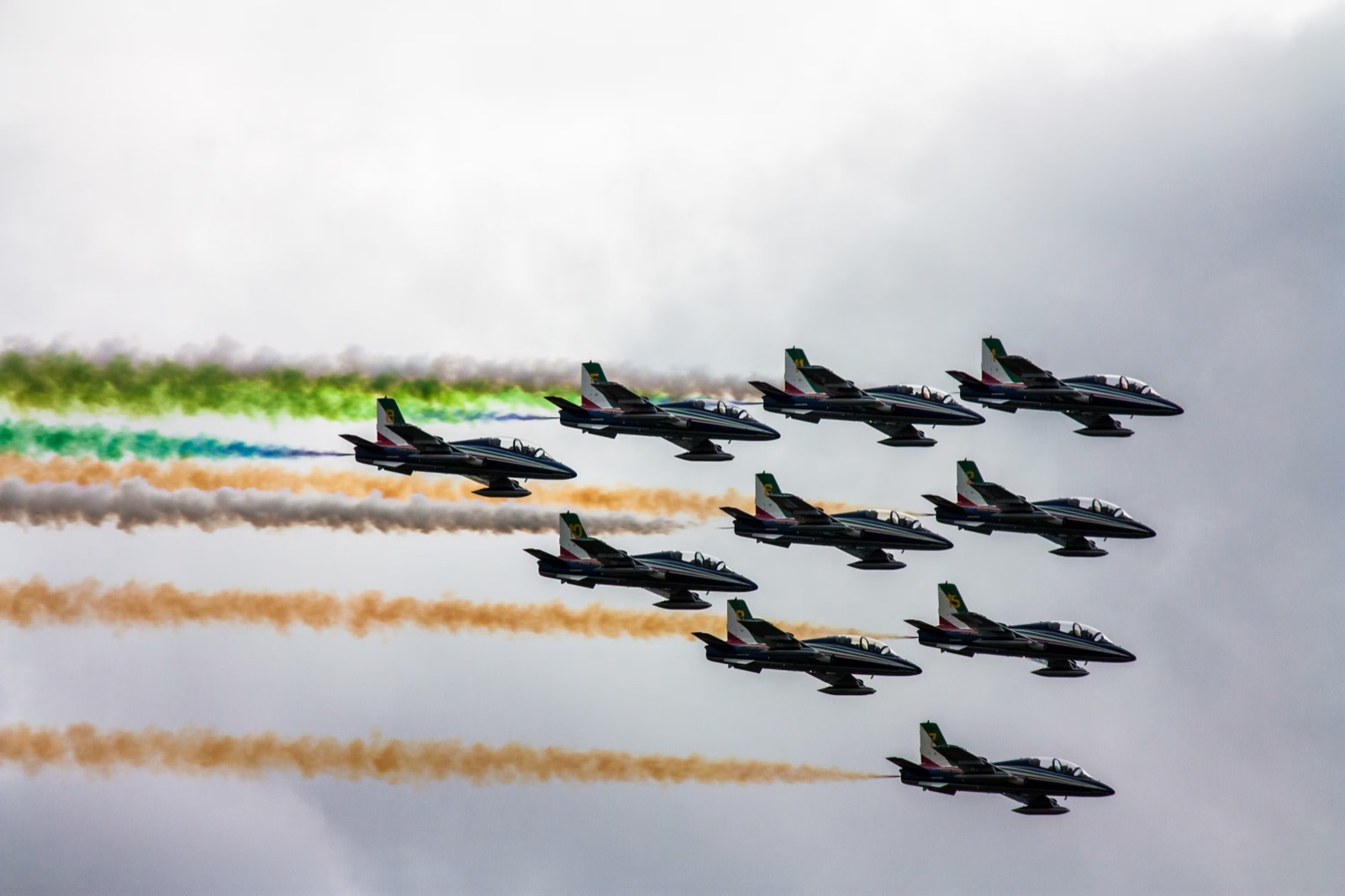
A formation is a workforce problem before it is a flying problem.
Three-Level Talent Architecture
The levels are not a hierarchy of importance. They are a hierarchy of legal constraint — and each level requires a different approach because of it.
Personnel legally appointed or enlisted into a national air force. This level sits entirely inside sovereign authority: appointment, rank, command, discipline and deployment belong to the government and its authorized military institutions.
Engineers, technicians, maintenance specialists and aviation professionals. The largest population in the ecosystem, the most certification-dependent, and the level where structured international recruitment has the clearest application.
Information technology, cybersecurity, communications and advanced technical professionals. This level competes directly with the global commercial technology market, which makes it the hardest to recruit and the hardest to retain.
Planning Implication
A recruitment strategy built around the cockpit addresses the smallest and most visible part of the workforce while leaving the largest and most constrained parts untouched.
Engineering, technical trades, technology and the air-base workforce carry the majority of the headcount, the majority of the certification burden and the majority of the shortage risk. A programme that does not address them is not a workforce programme.
Visibility
The most recognised roles attract the most applications and the most policy attention.
Headcount
Technical, engineering and base roles carry the bulk of the workforce.
Certification
Licences, ratings, currency and renewals concentrate in engineering trades.
Competition
Cyber and IT roles compete against the entire commercial technology market.
Next
Active, reserve, specialist reserve and national aviation emergency workforce structures — each qualified by national law.